

You started strong. You bought the app, or the journal, or printed the grid — and for two weeks you were unstoppable. Then you missed a Tuesday, and the whole thing fell apart. If you’ve been quietly wondering why your habit tracker isn’t working, you’re not lacking discipline. You’re using a tool built to reward perfection in a life that was never going to give you perfection.
Most habit trackers fail because they measure an unbroken streak instead of the behavior itself, so one missed day feels like the whole system collapsing. The fix isn’t more willpower — it’s tracking the action you actually took, forgiving a single missed day completely, and treating two misses in a row as the real signal to reset. Do that, and a tracker stops being a scoreboard you’re constantly losing.
Key Takeaways
- ✓A missed day rarely breaks a habit — research shows it barely dents your progress at all.
- ✓Two missed days in a row is the real danger point, not one.
- ✓Track the specific action you took, not just whether you “succeeded” for the day.
- ✓Keep your tracker down to three or four habits — a crowded tracker gets abandoned fastest.
- ✓Pick the format — app, paper, or planner — that fits how you actually move through your day, not the one that looks best online.
- ✓A broken streak isn’t proof you failed — it’s proof the system needs a smaller, sturdier design.
Why Your Habit Tracker Isn’t Working (It’s Not a Willpower Problem)
Here’s the part nobody tells you when you buy a cute habit-tracker journal: the design itself is working against you. Most trackers are built around one metric — the unbroken streak — because streaks are visually satisfying and easy to market. A perfect row of checkmarks looks like proof of a well-lived life. But that design has a hidden cost. Once the goal becomes “don’t break the chain,” a single missed day stops feeling like a normal, expected part of building a habit. It starts feeling like proof that you’re the kind of person who can’t follow through.
James Clear, who popularized habit tracking through Atomic Habits, lays out three real payoffs from the practice: seeing the tracker nudges you into action, watching your own progress build keeps you motivated, and marking a completed day just feels good. All three hold up. What he doesn’t dwell on is what happens when the tracker’s design turns those same three forces against you — when the visual cue becomes a source of dread, the “motivating” progress bar becomes a countdown to inevitable failure, and the satisfaction disappears the day you break the chain. That’s not a personal failing. That’s a design flaw baked into most trackers you can buy.


⚠️ Warning: If you’ve rebuilt the same habit tracker three or four times this year, the problem almost certainly isn’t your discipline. It’s that the tracker is punishing normal, expected inconsistency as if it were failure.
There’s also an identity layer to this that most trackers ignore completely. Research on long-term streak-keepers found that people who stuck with a daily behavior for months or years almost always came to think of themselves as “a streaker” or “a runner,” not just someone who happened to be doing the behavior that week. That identity is powerful — it’s part of why some people can run every single day for a decade. But it cuts both ways. When the identity is built entirely on an unbroken number, breaking that number doesn’t just cost you a checkbox. It can feel like losing the identity itself, which is a much bigger blow than missing one gym session should ever be.
This matters more than it sounds like it should, because the emotional hit from a broken streak often triggers something bigger than annoyance. It triggers avoidance. You stop opening the app. You “lose” the paper tracker under a stack of mail. Three weeks later you’ve quietly abandoned not just the tracker, but the habit it was supposed to support. If any of that sounds familiar, it’s worth reading how building self-discipline when motivation isn’t enough actually works in practice — because the fix for habit tracking and the fix for discipline turn out to be the same fix, just applied to different tools.

The Streak Trap: Why “Don’t Break the Chain” Backfires
“Don’t break the chain” is one of the most repeated pieces of productivity advice out there, credited to Jerry Seinfeld’s habit of marking a big red X on a calendar every day he wrote jokes. It’s a good story. It’s also, for most people, a trap. A 2024 qualitative study of long-term run streakers published in Health Psychology and Behavioral Medicine found that streaking does build strong automaticity — the running genuinely becomes second nature. But it comes with a cost the researchers called “preservation motivation”: at a certain point, you’re no longer motivated by the habit itself. You’re motivated by fear of losing the number.


That shift sounds harmless until you watch what it does to behavior. Participants in the study described running through injuries, cutting vacations short, and running laps around their living room during a blizzard rather than let a streak die. One streaker described it plainly: it stopped being a commitment and started edging toward something closer to an addiction. Separate research out of University College London on habit-tracking apps found the same pattern in digital form — reminders and streak counters are excellent at getting people to repeat a behavior, but they can create a dependency on the app itself rather than genuine automatic habit. Take the streak away, and the behavior often goes with it.
From the Research
“…missing one opportunity did not significantly impact the habit formation process.”
The same researchers found it was chronic inconsistency, not one skipped day, that actually stopped a habit from forming at all.
— Phillippa Lally et al., University College London
Read that quote again, because it’s the single most useful sentence in habit-tracking research: one miss doesn’t derail you. Chronic inconsistency does. Your habit tracker should be built to protect you from the second thing, not to punish you for the first. If a good chunk of your habit-tracking history is really about tracking motivation rather than action, it might help to pair whatever tracker you use with something smaller and more reliable, like the two-minute rule — a habit so small that showing up, not perfection, becomes the actual daily win.


What the Research Actually Says About Habits and Streaks
Most of what gets repeated about habit-building traces back to one 2010 study, and most of it gets repeated wrong. Phillippa Lally and her colleagues at UCL recruited 96 people, had each choose a new daily behavior, and tracked how automatic that behavior felt every day for twelve weeks. The famous number that came out of it was 66 days — the median time it took for a habit to plateau in automaticity. What almost never gets mentioned is the range: 18 days for the easiest habits, all the way up to 254 days for the hardest ones. There is no universal deadline. There’s a curve, and it’s different for everyone.
66
median days to automaticity
18–254
actual day range across habits
1
missed day that didn’t hurt the outcome
This is where a lot of people’s math goes wrong. If you’ve been treating “21 days to build a habit” as gospel — that number actually traces back to a 1960 book about plastic surgery patients adjusting to their new appearance, not habit science at all — then a tracker that “should” show a clean streak by day 21 is going to feel broken by day 25, even though nothing has actually gone wrong. Your habit isn’t behind schedule. The number you were told to expect was never accurate in the first place.
The UCL run-streaking research adds one more layer worth sitting with: automaticity and motivation aren’t the same thing, and a good tracker has to support both. Automaticity is what makes a habit effortless once it’s built. Motivation is what gets you through the days before that — the ones where the behavior still takes conscious effort. A tracker that only rewards the finished, automatic version of a habit gives you nothing useful during the messy middle, which is exactly when most people quit.
Built For This
The ADHD Productivity System
If your habit tracker keeps failing because your brain doesn’t run on rigid streaks, this guide builds systems around how your attention actually works — not against it.
Get the Guide →Fix #1: Track the Behavior, Not the Streak
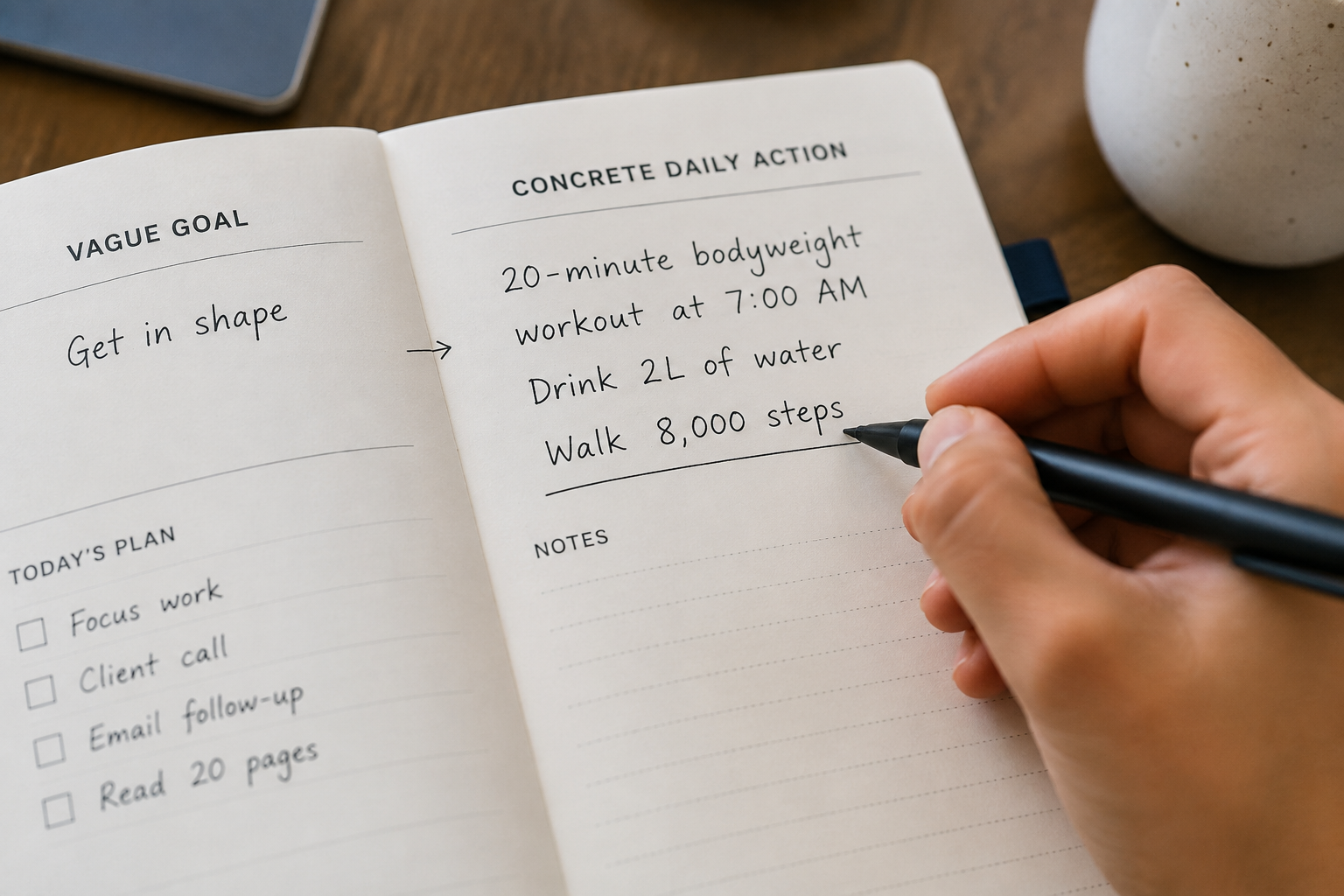
The single biggest redesign you can make is quiet but powerful: stop tracking “did I keep the streak alive” and start tracking “what did I actually do today.” It sounds like a small distinction. It changes everything about how a missed day feels.
Name the action, not the outcome
“10 push-ups after coffee” beats “exercise more.” The second one is a wish. The first one is a checkbox you either did or didn’t do today.
Log the minimum version too
Give yourself a “showed up” mark for the two-minute version of the habit on hard days. A tracker that only accepts the full version punishes exhaustion as if it were laziness.
Record immediately, not later
Mark it the moment you finish the habit, not at the end of the day from memory. Delayed logging is where most trackers quietly die.
There’s a practical reason this works, beyond just feeling better. When you’re tracking the specific behavior, you can actually diagnose what’s going wrong when things slip. A tracker that only says “missed” for three days in a row tells you nothing. A tracker that shows you skipped mornings specifically during a stretch of early meetings tells you exactly what to fix — maybe the habit needs to move to lunch, not that you need more willpower at 6 a.m.
Context matters more here than most people assume. UCL’s habit research found that a stable setting or cue — the same place, the same time, the same trigger — was central to how quickly a behavior turned automatic. If your tracker only records whether the habit happened, and not where or when, you’re throwing away the exact information that would tell you whether the cue itself is unreliable. Two lines are usually enough: what you did, and what triggered it. That second line is what turns a tracker from a scoreboard into an actual diagnostic tool. If you’re rebuilding this alongside your daily plan rather than as a separate system, pairing it with goals you’ll actually finish keeps the tracker anchored to something concrete instead of a vague yearly resolution.
Fix #2: Use the Never-Miss-Twice Rule Instead of Chasing Perfection
James Clear puts this better than almost anyone: “Missing once is an accident. Missing twice is the start of a new habit.” That one sentence should probably be printed on the front of every habit tracker sold. It reframes the entire relationship you have with a broken streak — the goal was never a spotless calendar. The goal is that the gap never becomes two days wide.
Mark the miss, don’t hide it
A blank square gets ignored. A visible “missed” mark keeps the tracker honest and shows you the miss was one day, not a pattern.
Set a recovery trigger
Attach the habit’s return to something that already happens tomorrow — after breakfast, after the commute — so getting back on track doesn’t require a fresh decision.
Reset the streak count, not the whole system
Start a new streak the next day instead of scrapping the tracker entirely. The habit didn’t fail. One number did.
✨ Quick win: Tonight, before bed, look at today’s box. If it’s blank, fill in what actually happened — even “skipped, too tired.” Tomorrow morning, do the habit before you check the tracker at all. That order matters more than most people realize.
This is also where evening planning quietly earns its keep. A habit that has to be decided fresh every morning competes with everything else demanding your attention at 7 a.m. If you already know tonight what tomorrow’s habit-tracking moment looks like — because you planned it as part of a ten-minute evening ritual — the “never miss twice” rule gets a lot easier to keep, because you’re not relying on willpower to remember the plan at all.

Why Your Habit Tracker Isn’t Working Anymore — And How to Rebuild It Right
Once you’ve fixed what you’re measuring, the last piece is matching the format to your actual life instead of the one that looked good on a productivity blog. Format matters more than most people give it credit for — a beautiful app is useless if you never open it, and a gorgeous paper spread is useless if it lives in a drawer you forget exists.
| Format | Best for | Main risk |
|---|---|---|
| App / phone tracker | People who already check their phone constantly and want reminders built in | Notification fatigue — you start swiping the reminder away without logging anything |
| Paper / wall calendar | People who want a visible, tactile record and habits tied to a fixed location | Out of sight, out of mind if it’s not somewhere you already look daily |
| Planner-integrated tracker | People who already run their day from a planner or bullet journal | Can get crowded fast if too many habits are squeezed onto one page |
If you’re not sure which column describes you, look at where you already succeed without trying. Do you check your phone the second you wake up? An app will catch you at a moment you’re already there. Do you sit down with a notebook most mornings anyway? A simple bullet journal setup will fold habit tracking into a routine you’ve already built, instead of asking you to start a new one from scratch. The best tracker isn’t the most elegant one. It’s the one that rides along on a habit you never have to think about starting.
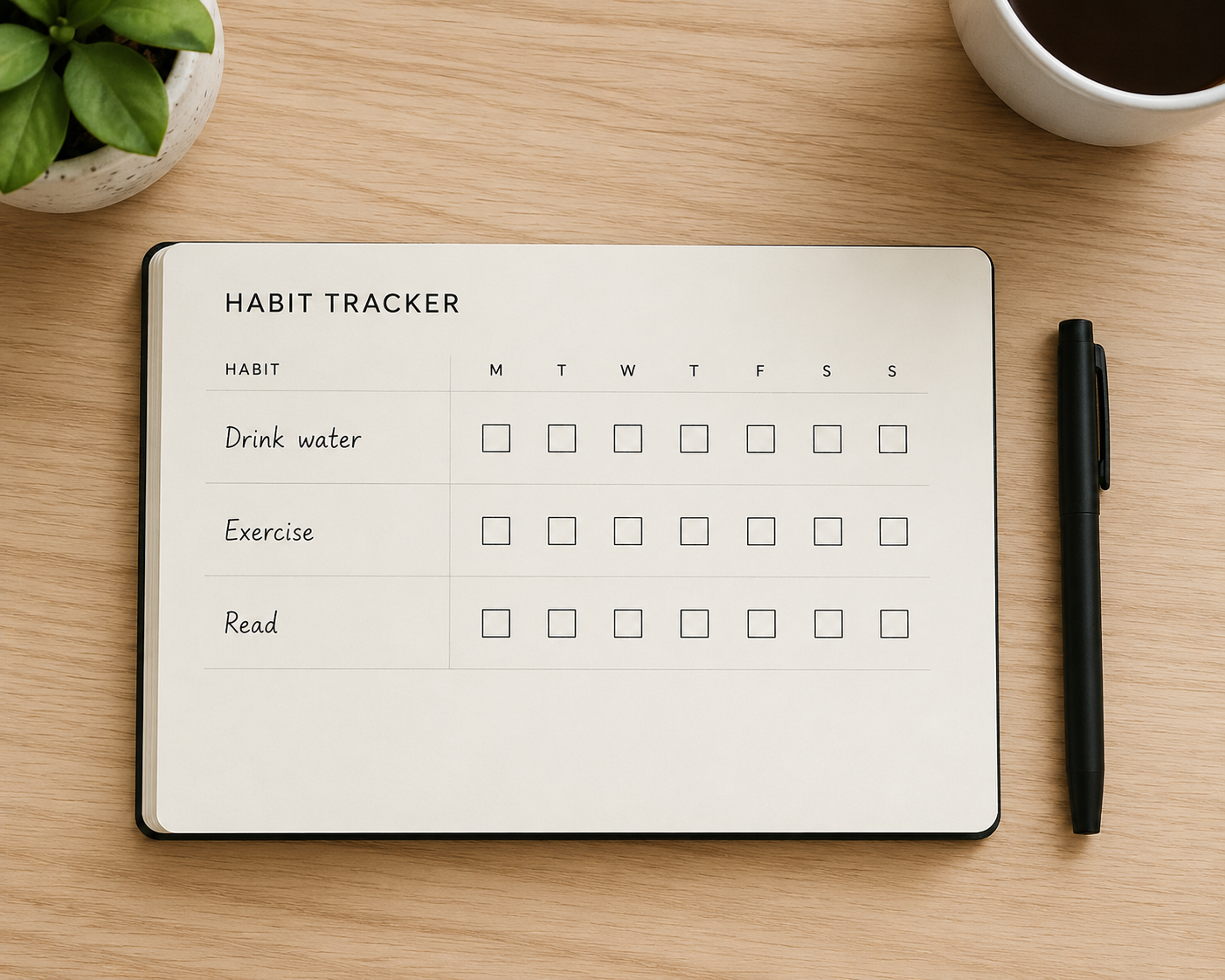
Whatever format you land on, keep it to three or four habits at most while you’re rebuilding trust in the system. Clear’s own guidance points the same direction: you’ll get further nailing one habit every single day than half-tracking a dozen of them. A tracker with twelve rows looks impressive on day one and abandoned by day nine. A tracker with three rows you actually fill in every day is doing more real work, even though it looks less impressive in a screenshot. This same idea shows up if you’re trying to anchor tracking to a broader daily structure — a morning routine that survives real life works for the same reason a good habit tracker does: it’s built around what you’ll actually do, not what you wish you’d do.
5 Habit-Tracking Mistakes That Quietly Kill a Streak
Even once you’ve redesigned the system, a few habits sneak back in and undo the work. Here’s what to watch for.
1. Tracking too many habits at once. Five new habits started on January 1st means five things competing for the same limited attention. Add habits one at a time, and only once the last one feels automatic.
2. Choosing a format you’ll never revisit. A tracker buried three folders deep on your phone, or a notebook that lives in a bag you don’t carry daily, isn’t a tracking problem. It’s a placement problem.
3. Treating a broken streak as evidence about your character. A missed day is data, not a verdict. The moment “I missed a day” turns into “I’m just not a disciplined person,” people quit the whole system rather than the one habit.
4. Copying someone else’s habit list. A tracker full of habits you saw on someone else’s feed rarely survives contact with your actual schedule. Track what your life needs, not what looked aspirational on a screenshot.
5. Never reviewing the tracker as a whole. Daily marks without a weekly glance-back miss the actual value: patterns. A five-minute look at the week — which days keep failing, which habits keep sticking — tells you more than any single day’s checkbox ever will.
If Focus Is the Real Bottleneck
The Focus Engine
Sometimes a habit tracker fails because the habit itself keeps getting crowded out by distraction, not because the tracker is badly designed. This guide is built to fix that half of the problem.
Get the Guide →FAQ: Habit Trackers and Broken Streaks
Why do I keep losing my habit streak?
Most streaks break because the tracker only accounts for the “complete” version of a habit. On hard days, there’s no smaller option to log, so the day gets marked as a total miss even if you did something. Add a minimum version of each habit and streaks get a lot more durable.
Is it bad to break a habit streak?
One broken day, on its own, has almost no measurable effect on habit formation according to UCL’s research. What matters is what happens next — whether you treat it as a single miss or let it slide into two, three, and eventually a quiet system-wide abandonment.
How many habits should I track at once?
Three or four at most while a tracker is new. Trying to track ten habits from day one usually means all ten get abandoned within a couple of weeks. Add a new habit only once an existing one feels close to automatic.
Are digital habit trackers better than paper ones?
Neither format is inherently better — the right one is whichever you’ll actually see and use every day. Apps work well for people glued to their phones; paper works better for people who want a tactile, visible record that doesn’t compete with notifications.
What should I do the day after I miss a habit?
Do the habit before you look at the tracker. Handling the behavior first, then logging it, keeps a bad streak-check moment from talking you out of showing up. Mark yesterday’s miss honestly, then start today’s mark fresh.
How long does it actually take to build a habit?
UCL’s research found a median of 66 days, with a real range of 18 to 254 depending on the habit’s difficulty. The “21 days” figure people often cite has no basis in habit research at all — it comes from a 1960s book about post-surgery patients.
None of this means throwing out the idea of tracking altogether. It means being honest about why your habit tracker isn’t working the way it’s currently built, and rebuilding it around behavior instead of perfection. Track the action, forgive the single miss, guard against the second one, and keep the whole system small enough to actually use. Give it a real trial — a few weeks, not a few days — before you decide whether the new version is working, since the whole point is to smooth out exactly the kind of rough week that used to end in a scrapped tracker. A system that survives your worst weeks will always beat a beautiful one that only survives your best. If this kind of small-system redesign is useful, the site’s full productivity and planning library covers the same territory — routines, time blocking, and planning tools built around the same idea: match the system to the life you actually have.
This article is for general informational purposes and isn’t a substitute for individualized coaching or medical advice. Research cited is drawn from peer-reviewed sources and public university research; no specific results are guaranteed.