

Every December, the holidays “surprise” you. Every year, the car needs tires, the insurance renewal lands, a wedding invitation arrives — and every time, it goes on the credit card as an “emergency.” This article explains sinking funds: the simple savings structure that turns predictable-but-irregular expenses into calm monthly line items, plus exactly how to set yours up this week.
Sinking funds are separate pots of money you build gradually for expenses you know are coming but don’t pay monthly — car repairs, holiday gifts, annual insurance, vacations. You divide the expected cost by the number of months until you need it, then save that amount automatically each month. When the expense arrives, the money is already waiting. Unlike an emergency fund, a sinking fund is for expected costs, not surprises.
Key Takeaways
- A sinking fund pre-saves for a known future expense by dividing its cost by the months remaining, so a $600 December costs you $50 a month starting January.
- Sinking funds and emergency funds are different tools: sinking funds cover predictable irregular costs; the emergency fund covers genuine surprises like job loss.
- Most households need only 4–7 sinking funds to eliminate 80% of their “emergencies” — car, home, gifts, annual bills, medical, travel, and clothing cover almost everyone.
- Keep sinking funds in a high-yield savings account with named sub-accounts or a simple tracker — never mixed invisibly into checking.
- Spending a sinking fund on its purpose is success, not loss; the fund existed to be emptied.
- Start with one fund this month. The car or the holidays — whichever has burned you most recently.
What Sinking Funds Are (And Why the Name Comes From Ships and Bonds)

A sinking fund is money set aside in advance, in small regular amounts, for a specific future expense with a roughly known cost and timing. The name predates personal finance by centuries: governments and corporations have long used “sinking funds” to gradually set money aside to retire — or sink — a bond debt when it came due, rather than facing the full repayment at once. The British government ran one as far back as the 18th century. Personal finance borrowed the mechanism because the logic is identical: a big known payment, sliced into painless installments you pay to yourself.

Here’s why the concept matters more than it sounds. Track a typical household’s “emergencies” for a year and a pattern appears: almost none of them are actually surprises. Tires wear out on a schedule. Holidays arrive on December 25th with remarkable consistency. Insurance renews annually, kids outgrow shoes seasonally, cars need registration on the same month every year. Researchers who study financial fragility — like the well-known Federal Reserve survey finding that a large share of American adults would struggle to cover a $400 unexpected expense — consistently note that many of those “unexpected” expenses were foreseeable in category, just not in date.
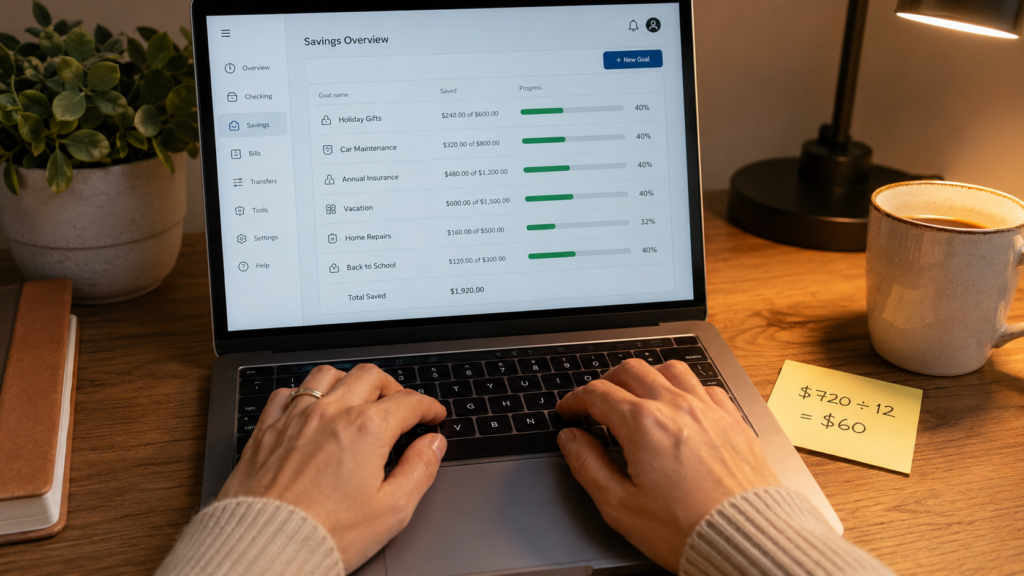
That’s the gap sinking funds close. They convert irregular timing into regular saving. The expense doesn’t change; your experience of it does. A $720 insurance renewal that lands on an unprepared checking account is a crisis. The same renewal landing on a fund that’s been quietly collecting $60 a month for a year is a non-event — you barely notice the money leave.
There’s a psychological payoff too, and it’s arguably bigger than the math. Money stress mostly isn’t about amounts; it’s about uncertainty and loss of control. Sinking funds attack exactly that. Once your seven or eight predictable irregulars are pre-funded, the months stop ambushing you. December becomes just another month. That calm is the real product.
Highly Related

Sinking Fund vs. Emergency Fund vs. Regular Savings: Three Different Jobs
These three pots get lumped together as “savings,” and mixing them is how people accidentally drain the wrong one at the wrong time. Each has a distinct job.
| Sinking Fund | Emergency Fund | Regular Savings | |
|---|---|---|---|
| Pays for | Known, predictable irregular costs | Genuine surprises: job loss, medical crisis, urgent repair beyond funds | Long-term goals: house deposit, investing, future plans |
| You know… | What and roughly when | Neither what nor when | What, but timing is flexible |
| Target size | Exact cost of the expense | 3–6 months of essential expenses | Goal-dependent |
| Emptied when used? | Yes — that’s the point | Only in true emergencies, then refilled first | Rarely; grows over years |
| Example | $50/month for December gifts | Laid off in March | Saving $20,000 for a home |
The distinction that trips people up most: a sinking fund expense is not an emergency, even when it feels urgent. New tires are urgent the day the mechanic shows you the tread — but tires were always coming, so they belong to the car sinking fund, not the emergency fund. The emergency fund is your last line of defense; every predictable expense you route away from it makes it more likely to be full when a real crisis hits.
The order of operations, if you’re building from zero: first a small starter emergency fund ($1,000 or one month of expenses), then your first two or three sinking funds, then the full emergency fund, then long-term savings. Why do sinking funds jump the queue ahead of the full emergency fund? Because they protect it. An emergency fund that gets raided every December for gifts and every summer for car registration never reaches its target. Sinking funds are the bodyguards; build a few before you build the treasure.
The 7 Sinking Funds Almost Every Household Needs (With Real Numbers)
You don’t need twenty funds — you need the handful that match where your surprises actually come from, and for most households that’s these seven. Pull your last twelve months of statements and check which ones have burned you.
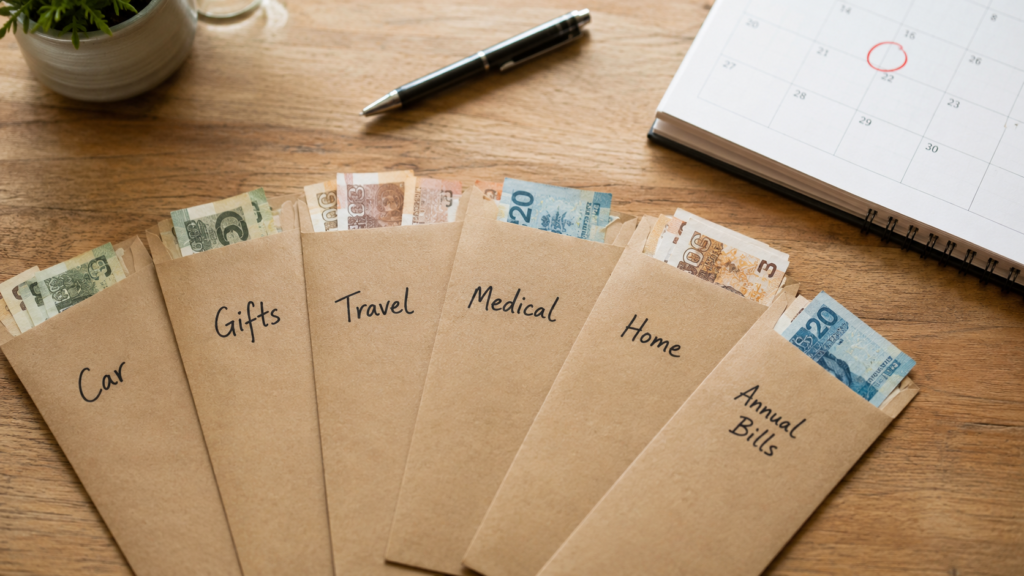
1. Car maintenance & repairs — typical target: $50–100/month. Tires, brakes, servicing, registration, the occasional real repair. A reasonable annual planning number for an average used car is $600–1,200 depending on age and mileage. This is the single highest-impact fund for most people because car costs are the most common “emergency” in household budgets.
2. Holidays & gifts — typical target: $40–80/month. Add up last year honestly: gifts, travel home, food, decorations, the office party outfit. Most people land between $500 and $1,000. Divide by twelve and December stops being a debt event. Starting in January makes this fund almost invisible; starting in September makes it painful — start in January.
3. Annual & semi-annual bills — target: total ÷ 12. Insurance premiums, subscriptions billed yearly, professional fees, property taxes if applicable. List every bill that doesn’t arrive monthly, sum them, divide by twelve. This fund alone typically absorbs $800–2,000 a year of formerly “surprise” billing.
4. Medical & dental — typical target: $25–75/month. Deductibles, prescriptions, the filling, new glasses. Even with decent insurance, out-of-pocket health costs arrive irregularly and always feel like emergencies. They aren’t.
5. Home & appliance — typical target: $40–100/month. Renters: think furniture, small appliances, moving costs at lease end. Homeowners: the common rule of thumb is saving around 1% of your home’s value annually for maintenance, because the water heater has a lifespan and it’s shorter than you think.
6. Travel & vacations — target: trip cost ÷ months until departure. The fun one, and strategically important: a vacation paid from a sinking fund is pure pleasure, while the same vacation on a credit card follows you home for eight months. If a $1,800 summer trip is ten months away, that’s $180 a month — and if you can’t fund $180, you’ve learned the trip needs to be $1,200, before booking rather than after.
7. Clothing & seasonal — typical target: $25–60/month. Especially with kids, who outgrow everything simultaneously each season. Adults: interview clothes, winter coats, shoe replacement.
Total across all seven for a typical household: $250–500 a month. That number can look alarming until you realize you were already spending it — reactively, at worse prices, often with interest. The sinking funds don’t add expenses; they schedule them.
Start with one or two, not all seven. Momentum matters more than completeness, and the fund that matches your most recent “emergency” is the right first pick.
How to Set Up Your Sinking Funds This Week (Account Setup and the Math)
Setting up sinking funds takes about 45 minutes and three decisions: where the money lives, how you track the pots, and how the money moves. Here’s the practical version.
Where the money lives: a high-yield savings account, separate from checking. Separate, because money you can see in checking gets spent — that’s not a discipline failure, it’s how attention works. High-yield, because these balances sit for months and should earn while they wait; online savings accounts routinely pay many times the interest of traditional bank savings.
the CFPB’s guide to bank accounts covers what to check before opening one (fees, minimums, transfer speed).How to track the pots — three options by temperament:
- Multiple sub-accounts or “buckets.” Many online banks let you split one savings account into named buckets — “Car,” “Gifts,” “Travel” — with individual balances. Cleanest option, zero math, immensely satisfying to look at.
- One account plus a simple tracker. One savings account holding everything, plus a note or spreadsheet recording how much belongs to each fund. Works fine; requires updating the tracker when money moves.
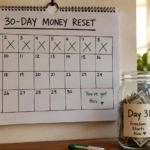
- Cash envelopes. Physical envelopes for smaller funds like gifts or clothing. Old-fashioned, weirdly effective for people who overspend digitally — the envelope going thin is feedback no app matches.
The math, once per fund: expected cost ÷ months until needed = monthly contribution. Recurring annual expenses just divide by 12. For a fund with a deadline (a trip, a wedding), count the actual months remaining. Round up to a friendly number.
The money movement: automate it, timed to payday. One automatic transfer, the day after your paycheck lands, split across your funds. Automation is non-negotiable here — a sinking fund maintained by monthly willpower lasts about nine weeks. Set it once; the system runs without you.
Two operating rules that keep the system honest. First, when a fund’s expense arrives, spend the fund without guilt — watching your car fund drop $400 for brakes feels like losing, but it’s the entire mission succeeding. Second, review the funds twice a year: costs drift (insurance rises, kids’ sizes change), and a ten-minute adjustment keeps the monthly numbers true. If you already run a zero-based budget, each sinking fund is simply a category line; the two systems fit together perfectly.
Common Sinking Fund Mistakes (That Even Organized People Make)

These are the failures that hit people who read the guides and set everything up correctly — the second-order mistakes.
1. Raiding a healthy fund because “nothing has happened yet.” Month nine: the car fund holds $700, the car purrs, and a concert weekend beckons. This is the single most common sinking-fund killer, and it’s insidious because the raid is invisible until the expense lands — usually within a few months, on a card. Fix: treat assigned money as already spent. If your priorities genuinely changed, formally close or reduce the fund during a monthly review — a deliberate decision on paper, never an impulse at checkout.
2. Creating twelve funds on day one. Enthusiasm builds a fund for everything — pet, phone, hobby, haircuts — and the monthly total hits $600, which the budget can’t sustain, so by month three the whole system is abandoned as “not working.” The system was fine; the load was wrong. Fix: two funds maximum to start, chosen by recent pain. Add one fund per quarter as the habit proves itself.
3. Funding sinking funds before minimum debt payments or the starter emergency fund. Pre-saving for a vacation while a credit card compounds at 22% is paying interest for the privilege of saving. Fix: minimums and a $1,000 starter emergency fund come first, always. Then sinking funds. Then extra debt payoff and the rest — the sequence matters more than the enthusiasm.
4. Setting targets from optimism instead of receipts. Budgeting $300 for holidays because that’s what a reasonable person spends — when your last three Decembers averaged $850 — guarantees a $550 gap that lands exactly where it always did. Fix: targets come from your actual history, found in your statements. Reduce spending as a separate, deliberate project; never bake the wish into the math.
5. Letting completed funds die instead of redirecting them. The trip happens, the fund empties, the $180 monthly transfer gets cancelled — and three months later that money has silently dissolved into daily spending. Fix: the moment a fund completes, redirect its transfer the same day: to the next trip, to debt, to the emergency fund. Money that already leaves your checking automatically is the easiest money you’ll ever save; never release it back into the wild.
FAQ
What is a sinking fund in simple terms? It’s money you save a little at a time for an expense you know is coming — like saving $50 a month starting January so December’s $600 of gifts is fully paid before the holidays arrive. You divide the cost by the months you have, automate that transfer, and the “big” expense becomes a calm line item instead of a crisis.
What’s the difference between a sinking fund and an emergency fund? A sinking fund is for expenses you can predict — car maintenance, annual insurance, holidays. An emergency fund is for genuine surprises: job loss, a medical crisis, a repair bigger than any fund. Keeping them separate protects your emergency fund from being drained by predictable costs, so it’s actually full when a real emergency hits.
How many sinking funds should I have? Start with one or two, build toward four to seven. The most useful for typical households: car repairs, holidays and gifts, annual bills, medical, home maintenance, travel, and clothing. More than eight usually collapses into maintenance fatigue. Pick your first fund based on whichever surprise expense hurt you most in the last year.
Where should I keep my sinking funds? In a high-yield savings account separate from your checking — ideally one with named sub-accounts or “buckets” so each fund has its own visible balance. Separation stops the money from being absorbed into daily spending, and the higher interest means balances that sit for months earn something while they wait.
How much should I put in sinking funds each month? Divide each expense by the months until you need it: a $720 annual insurance bill is $60 a month; a $1,500 trip ten months away is $150 a month. Most households total $250–500 monthly across all funds — money they were already spending reactively. Base every target on last year’s real statements, not on optimistic guesses.
Are sinking funds worth it on a low income? Arguably more than at any other income level, because on tight margins a $300 surprise does the most damage. Start with one fund and a small amount — even $20 a month toward car costs changes the shape of the bad day when it comes. The point isn’t the size of the fund; it’s replacing crisis borrowing with pre-payment.
Closing
Sinking funds work because they tell the truth about your expenses: almost nothing that ambushes your budget was actually unpredictable, and anything predictable can be pre-paid in painless slices. One fund, automated this week, is worth more than seven planned for someday. Open last year’s statements tonight, find the expense that hurt most, divide it by twelve — and let that be the last time it surprises you.