


Motivation got you to buy the running shoes, download the language app, and open the business plan — and motivation left three weeks later, as it always does. What carries people the rest of the way isn’t a feeling; it’s a structure. This guide covers how to build self-discipline the way the research actually describes it: less like gritting your teeth, more like engineering a life where the right choice is the easy one.
Self-discipline is the ability to do what you decided to do, even when you don’t feel like it — and you build it less through willpower than through design. The reliable methods: shrink commitments until they’re too small to skip, attach them to existing routines, remove temptations from your environment instead of resisting them, track your streak visibly, and treat lapses with quick recovery rather than self-punishment. Structure carries you on the days motivation doesn’t.

Key Takeaways
- Self-discipline is keeping promises to yourself when the feeling is gone — and the highest performers rely on friction design and habits more than raw resistance.
- Research on “successful self-controllers” shows they experience fewer temptations, not stronger resistance; they engineer their environments in advance.
- Start embarrassingly small: a commitment you can keep on your worst day builds the identity that powers bigger ones.
- Discipline is domain-specific and buildable — each kept promise is a rep, and identity (“I’m someone who shows up”) compounds faster than outcomes.
- Sleep, food, and stress are discipline infrastructure: self-control collapses on six hours of sleep no matter how strong your character is.
- The recovery skill — never missing twice, without self-punishment — matters more than the streak itself.
What Self-Discipline Really Is (The Research Version, Not the Drill Sergeant Version)
Self-discipline is the capacity to act on your own decisions after the emotional support for them has left — and modern research paints it very differently from the teeth-gritting image most people carry. The drill-sergeant model says disciplined people feel the same temptations you do and heroically crush them daily. The data says something stranger and more useful.

The landmark finding comes from work by Wilhelm Hofmann, Angela Duckworth, and colleagues, who tracked people’s real-world temptations and resistance using experience sampling — pinging them throughout the day. People who scored high on trait self-control reported fewer temptation battles, not more victories in them. They weren’t better resisters; they had arranged lives that generated less to resist — no chips in the house, phone out of the bedroom, gym on the commute route, friendships with people whose defaults matched their goals. Duckworth, the University of Pennsylvania psychologist best known for her research on grit (passion and perseverance for long-term goals), summarizes the strategy bluntly: situation modification beats willpower. The disciplined-looking person at the office isn’t winning a war you’re losing; they’re mostly not fighting it.
This reframe rescues the concept from two dead ends. The first is the character verdict — “I’m just undisciplined” — which treats a design problem as a personality sentence. Discipline is domain-specific (the same person is rigorous about finances and chaotic about diet) and trainable, which no fixed character trait would be. The second dead end is the willpower-as-muscle obsession. The famous “ego depletion” studies — suggesting willpower drains like a battery — hit serious replication trouble in the 2010s, and the field’s honest current position is that moment-to-moment willpower is real but unreliable, especially under fatigue, hunger, and stress. Building your system on daily acts of heroic resistance is building on the least dependable material available.
What actually correlates with long-term self-discipline, across the research: habits (automatic behaviors that skip the decision entirely), environment design, clear rules that remove deliberation, adequate sleep, and — the underrated one — identity: people who see themselves as “someone who trains” don’t spend willpower deciding whether to train. The rest of this guide builds those five, in order. For a readable research overview, the American Psychological Association’s willpower report is a solid open resource.


Start Smaller Than Your Pride Wants: The Minimum Viable Promise

The fastest way to build self-discipline is to make a promise so small you can keep it on your worst day — because what you’re actually training isn’t the behavior, it’s the keeping. Here’s the method and the reasoning.
Every broken self-promise costs double: the missed workout, plus a small withdrawal from your trust in your own word. String enough broken promises together and you develop the quiet expectation of your own failure — “I never stick to anything” — which then functions as a self-fulfilling forecast. The repair runs the same mechanism in reverse: kept promises, however tiny, rebuild self-trust, and self-trust is the actual substance of discipline. This is why BJ Fogg’s Stanford behavior-design research and James Clear’s Atomic Habits converge on the same prescription from different directions: shrink the commitment below the failure threshold. Not thirty minutes of exercise — two push-ups. Not an hour of writing — two sentences. Not a full budget overhaul — checking one account balance daily.

Your pride will object that two push-ups accomplish nothing, and your pride is measuring the wrong thing. The two push-ups aren’t fitness training; they’re promise-keeping training — a daily rep of “I said I would, and I did,” performed under any conditions: sick, traveling, devastated, busy. Thirty consecutive days of a kept micro-promise builds more usable discipline than three heroic weeks followed by the usual collapse, because the collapse doesn’t just erase the fitness — it reconfirms the forecast of failure. Small and unbroken beats big and shattered, every time, because the streak is the curriculum.
The mechanics that make micro-promises stick:
Anchor it to an existing behavior. “After I pour my morning coffee, I do my two push-ups.” The established routine fires automatically and drags the new behavior with it — the same anchoring principle that powers durable morning routines. Floating commitments (“exercise daily”) rely on remembering and deciding; anchored ones ride existing rails.
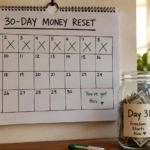
Make it binary and visible. The promise either happened today or it didn’t — no partial credit accounting to game. Track it with a wall calendar X, a jar of marbles moved left to right, anything physical and in sight. Visible streaks recruit loss aversion (you’ll show up just to protect the chain) — cheap fuel, and it works.
Scale only on schedule, never on enthusiasm. Week three’s motivation surge will demand you jump from two push-ups to a full program. Refuse. Enthusiasm-driven scaling is how micro-habits die — the inflated version fails on the first bad day and takes the streak with it. Instead, scale by calendar rule: after four unbroken weeks, increase 20–50%. Boring, and it compounds: two push-ups on this schedule becomes a real training habit within months — attached to an identity that no longer questions whether you train.
Engineer the Environment: Winning Fights by Never Having Them
The highest-leverage discipline work happens before the moment of temptation, in how you arrange your spaces, defaults, and rules — and it splits into three layers.
Layer one: friction engineering. The principle is almost embarrassingly simple: add steps to the behaviors you want less of, remove steps from the ones you want more of. Behavioral economists have shown that even trivial friction shifts behavior at scale — default enrollment famously transformed retirement savings rates (Thaler and Benartzi’s Save More Tomorrow work) not by persuading anyone but by changing which choice required effort. Personal applications: junk food doesn’t enter the house (the discipline decision happens once weekly, in the supermarket, well-fed — not nightly, tired, in front of the cupboard); the phone charges outside the bedroom and social apps live in a folder on the last screen, logged out; the gym clothes are laid out the night before and the guitar sits on a stand in the living room, not in a case in a closet. Every added or removed step is a fight you no longer have to win with willpower. Audit one behavior this week: list the steps between impulse and action, then adjust the count.
Layer two: bright-line rules. A bright-line rule is an absolute, no-judgment-required standard: no phone at the dinner table; no purchases over $100 without a 48-hour wait; writing happens before email, every workday. Bright lines outperform moderation intentions (“less phone at dinner,” “fewer impulse buys”) for a mechanical reason: moderation requires a fresh negotiation every single time — is this the exception? — and every negotiation is a chance to lose, especially when tired. An absolute rule is decided once and merely executed thereafter. Research on habits and automaticity consistently finds that removing deliberation removes the failure point. Choose bright lines only for your genuine weak spots — a life of total rules is brittle — but where you’re weakest, moderation is a trap and clarity is mercy.
Layer three: the human environment. Your defaults quietly average toward the people around you — social contagion research (Christakis and Fowler’s network studies) tracked how behaviors from smoking to exercise spread through friendship networks like slow weather. You can’t and shouldn’t replace your friends for productivity reasons, but you can add deliberately: one training partner who expects you Tuesday, one writing group with a weekly page count, one friend running the same savings challenge. An expectation held by another human is friction working in your favor — skipping now has a social cost, and the meeting happens whether your motivation attended or not.
The three layers share one signature: they all spend discipline once, in advance, at a calm moment — shopping day, rule-setting day, the day you asked a friend to train together — instead of nightly at the moment of weakness. That’s the entire trick of people who look effortlessly disciplined. The effort happened earlier, where you couldn’t see it.
Maintain the Machine: Sleep, Stress, Recovery, and the Art of Missing Once
Self-discipline runs on biological hardware, and treating the hardware as optional is why identical systems succeed in March and collapse in November. Four maintenance disciplines keep the machine running.
Sleep is the foundation, non-negotiably. Every capacity discipline depends on — impulse inhibition, emotional regulation, future-oriented thinking — lives in the prefrontal cortex, and the prefrontal cortex degrades measurably with sleep restriction. Studies of sleep-deprived decision-making show increased impulsivity, stronger craving responses to junk food, and weaker resistance across the board; Matthew Walker’s Why We Sleep compiles the grim catalog. The practical translation: your 11 p.m. discipline failures are frequently 6-hour-sleep problems wearing a character-flaw costume. If your discipline reliably collapses in the evening, the highest-leverage fix may be bedtime, not resolve.
Stress and hunger are the other two saboteurs. Acute stress shifts the brain toward habit and immediate reward — which is why the brutal workweek ends in abandoned routines, and why “I’ll rely on willpower during the crunch” is planning to fail. The countermeasures are unglamorous: during known high-stress periods, deliberately shrink your commitments back to their minimum viable versions (two push-ups, two sentences) rather than suspending them — the streak survives at reduced power, which is infinitely better than a cold restart. And don’t schedule your hardest discipline moments hungry; the supermarket rule (never shop hungry) generalizes further than people apply it.
Recovery is the skill that separates long-term disciplined people from streak-and-crash cyclists. You will miss days — travel, illness, grief, chaos. The research-backed protocol mirrors what procrastination studies found about self-forgiveness: self-punishment after a lapse increases subsequent failure, because shame is emotional load and emotional load is what breaks discipline. The working rules: never miss twice (one miss is an accident; two begins a new pattern — so the day after a miss is the most important day of the month, and the minimum version counts fully); no compensatory overcorrection (the double workout after a missed day is guilt masquerading as commitment, and it makes the habit aversive); and conduct a blameless review (what circumstance produced the miss, and what one adjustment makes it rarer? — engineering questions, not character questions).
Schedule deliberate slack. Systems with zero give shatter on first contact with real life. Build in the planned rest day, the weekly “free” evening, the cheat meal if food is your domain — scheduled release valves, decided in advance, so flexibility never has to be improvised in a weak moment. Paradoxically, the disciplined life needs designed looseness; rigidity isn’t strength, it’s brittleness with good posture.
Common Self-Discipline Mistakes (That Even Determined People Make)

Beyond the obvious “don’t rely on motivation,” these are the failure modes of people genuinely putting in the work.
1. Overhauling five life domains simultaneously. New diet, new gym program, new wake time, new budget, new reading habit — launched the same Monday. Each change draws on the same limited adaptation capacity, so all five run underfunded and the collective collapse gets read as a character verdict. Fix: one domain at a time, minimum four weeks before adding the next, with the others held at maintenance. Sequential compounding beats parallel collapse — a year of one-at-a-time still transforms five domains.
2. Confusing intensity with discipline. The 5 a.m. cold-shower 90-minute-workout fortnight feels magnificently disciplined and is usually its opposite: enthusiasm cosplaying as structure, burning bright precisely because it’s unsustainable. Real discipline is almost disappointingly calm — the modest thing, done again. Fix: judge any new commitment with one question: “can I picture doing this on a bad Tuesday in November?” If not, shrink it until you can.
3. Building streaks with no minimum version. A streak defined only by the full behavior — the complete workout, the full writing session — dies on the first genuinely impossible day, and streak-death demoralizes out of proportion. Fix: define every commitment at two tiers from day one: the standard version and the two-minute minimum that fully counts. The minimum isn’t a loophole; it’s the streak’s crash protection, and protecting the identity (“I show up daily”) matters more than any single day’s volume.
4. Using self-contempt as fuel. The inner drill sergeant — “you’re pathetic, no wonder you fail” — feels like high standards and performs like sabotage: self-criticism reliably predicts worse subsequent self-control in the research, because shame is exactly the emotional weight that impulsive behavior escapes from. Kristin Neff’s self-compassion studies find the compassionate responders recover faster and persist longer — not because they let themselves off, but because they skip the shame spiral and go straight to the adjustment. Fix: after every lapse, speak to yourself in the voice you’d use with a friend you respect: “rough day; what’s the fix; minimum version tonight.”
5. Never graduating promises into automation. Some people white-knuckle the same decision for years — deciding daily to save money, deciding daily not to check the phone at dinner — spending fresh discipline on battles that should have been retired long ago. Fix: quarterly, audit your recurring acts of resistance and ask which can become structure: the savings decision becomes an automatic transfer; the phone decision becomes a charging dock by the door; the workout decision becomes a standing appointment with a partner. Discipline’s highest use is building the systems that make itself unnecessary — the goal was never a lifetime of fighting; it was a life that doesn’t need the fight.
FAQ
How do I build self-discipline from nothing? Start with one promise small enough to keep on your worst day — two push-ups, two written sentences, one account balance checked — anchored to an existing routine like morning coffee. Track it with a visible X on a calendar, and don’t scale up for four weeks no matter how motivated you feel. You’re training promise-keeping, not the activity itself; the self-trust from an unbroken month is the foundation everything else builds on.
Is self-discipline genetic or learned? Both, like most traits — twin studies suggest self-control has a heritable component, but the practical ceiling is set by learnable factors: habits, environment design, clear rules, sleep, and identity. The research on highly self-controlled people is encouraging here: they mostly aren’t resisting harder; they’ve arranged lives with fewer temptations. Arrangement is a skill, and skills are learned at any starting point.
Why do I have no self-discipline even though I want to change? Wanting change and executing it use different machinery — and execution usually fails from design, not desire: commitments too big to survive bad days, environments full of easy temptations, no anchor cues, and often too little sleep, which measurably weakens impulse control. Audit those four before questioning your character. If the pattern is severe and lifelong, conditions like ADHD or depression can also wear “no discipline” as a mask — worth a professional conversation.
Is willpower really limited? The famous “ego depletion” research suggesting willpower drains like a battery ran into major replication problems, so the strong version is doubtful. What’s solid: willpower is unreliable under fatigue, stress, and hunger, and moment-of-temptation resistance is the weakest place to stake your plans. Build on habits, environment design, and pre-made rules instead — they work whether or not the tank is full.
How long does it take to become disciplined? Expect the first anchor habit to feel automatic in one to three months — habit research (Lally’s UCL study) found an average of about 66 days, with simpler behaviors locking in faster. Feeling like “a disciplined person” in a domain typically takes a few months of unbroken small promises plus one or two graduations in size. It compounds: the second habit installs faster than the first, because the identity is already load-bearing.
What’s the difference between self-discipline and motivation? Motivation is a feeling — abundant at the start, unreliable afterward. Self-discipline is structure that executes your decisions when the feeling is gone: anchored habits, friction-designed environments, bright-line rules, visible streaks, and a recovery protocol for missed days. The practical relationship: use motivation’s early surge to build the structure, because the structure is what remains when the surge ends — and it always ends.
Closing
Building self-discipline is mostly quiet engineering: promises shrunk below the failure threshold, environments arranged so the right choice is the lazy one, and a recovery rule that makes missed days cost one day instead of the whole streak. The disciplined people you admire aren’t winning daily wars — they designed most of the wars out of existence. Choose your one minimum viable promise tonight, anchor it to tomorrow’s coffee, and let the first X on the calendar start the compounding.
Don’t Miss: